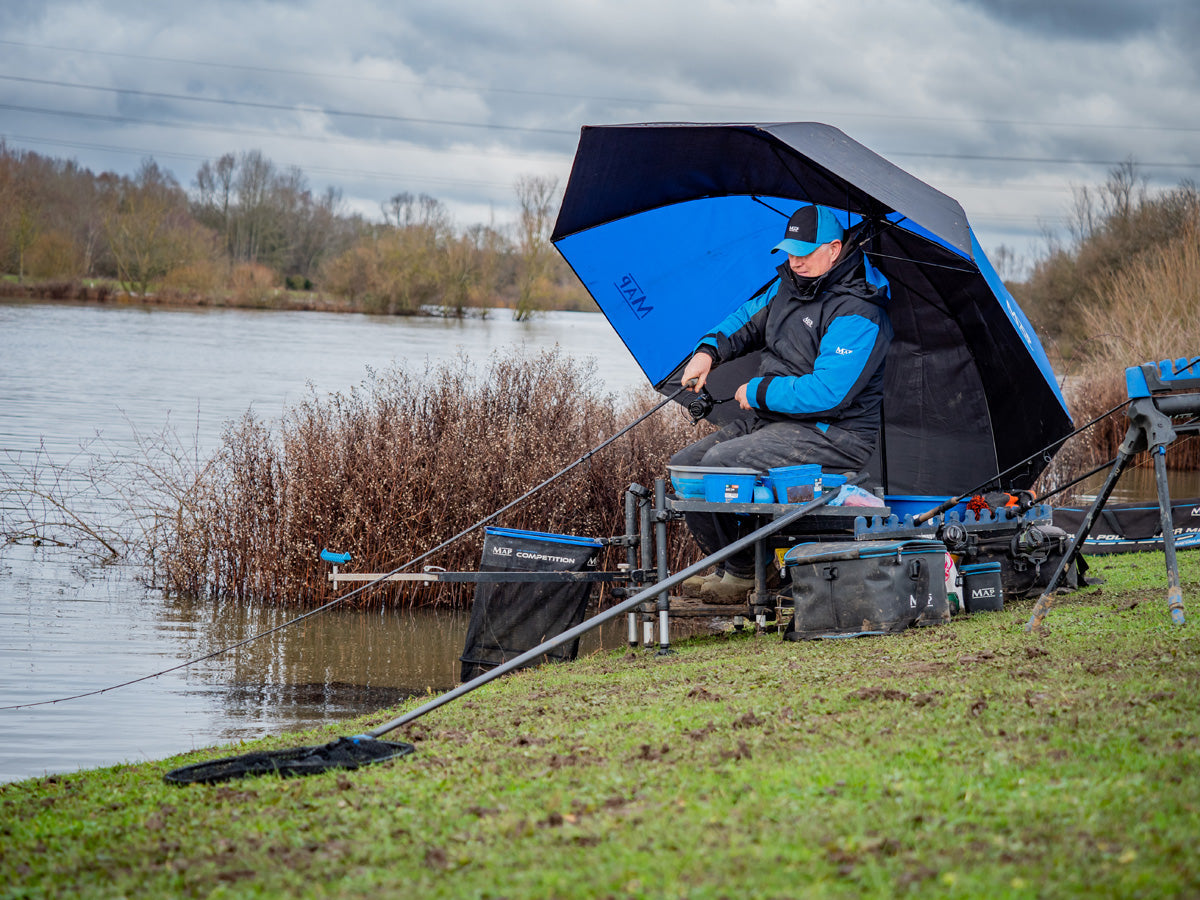

Taming The Tide
Graham West heads to deepest Norfolk to tame the Tidal River Thurne, catching a boat load of fish on the feeder at short range along the way!

The Norfolk Broads undoubtedly offers some of the best river fishing in the country especially where Bream, Skimmers and Roach are concerned. With a thriving match scene and sold-out events taking place every week, this is one area of the country where river match fishing is certainly not in decline!
Without a doubt the River Thurne is my favourite of the broads’ rivers, full of skimmers, roach and perch there are bites to be had from every peg and unlike some of the other broads’ rivers, it’s possible to catch big weights at close range on the feeder.

There’s a few reasons for this, the main ones being that the river is shallower than the neighbouring River Bure, with the deeper water close to the bank on some sections, the skimmers are a slightly smaller stamp but greater in numbers and as is customary on in Norfolk, the boat traffic is heavy so by fishing short I can maximise my time in the water.
Changing Tides

With a little understanding, tackling tidal rivers isn’t as complicated as it might seem, and unlike some other tidal rivers around the country the change in flow and depth isn’t as great meaning minimal changes need to be made as the river changes.
Generally, the fishing is best when the river is towing either on an incoming or outgoing tide, the worst part of your day will usually coincide with full or low tide before the tide turns again when the river has little to no flow at all.

This is common on other tidal rivers too, so I always try to make the most of the times when the river is flowing at pace to catch the better stamp fish. During low water, a small fish approach can fill the void until the flow picks up and the bigger fish start to feed again.
The beauty of fishing on this venue is that I can get away with light feeders which really does help with bite detection, when fishing for smaller fish – roach from an ounce to 6oz, and skimmers up to 2lb.
At certain times of the day I can use 15g cage feeders without the feeder bouncing, and very rarely do I have to use anything over 25g, again a big advantage when it comes to maximising bite detection from shy biting species.

Rod positioning can also be quite different to what we usually see on flowing water – with my focus being on a short line, I can keep my rod down quite low when the tide is and flow is steady. When it starts to pull, I’ll raise the rod to keep a bit of line off the water and help keep the feeder in place.
Set Up
On the River Thurne, which is a narrower and shallower river than most of the rivers found on the broads, fishing short can be your best line due to the boat traffic and the fish getting pushed a little closer to the bank naturally, allowing more time in the water.

It may seem a little odd to some anglers that I choose to fish the feeder when the pole is allowed on the matches I fish here sometimes, but I find the accuracy of the feed, positivity it offers and a static bait is the perfect recipe for catching big weights of skimmers,
The rod I always choose for fishing short on the River Thurne is a 10ft MAP Generation Pro Feeder this has a super-soft action, perfectly suited to this type of fishing and once again it proves that rod choice doesn’t always have to be about a big price tag.

The Generation range represents MAP’s cheapest rods, but I choose it for its qualities and suitability for the job in hand and this one does it perfectly. My 10ft rod is teamed up with a 5000 Generation Pro reel loaded with 6lb mono.
Rig wise, I’m using a fixed paternoster rig, and I find this perfect for showing up bites quickly as the set-up is so direct. At the business end 0.13mm MAP Optimum Power is the perfect hook length, starting off at 50cm and adjusting as the fishing evolves, to a size 14 or 12 hook.

The hook length is something I am constantly playing around with, and there’s no set rule on what will be right on the day, a 50cm hook length gives me a great starting point whether to increase the length if bites are harder to come by or shortening it further if I’m getting instant bites.
Just because you’re catching fish on these venues doesn’t mean you couldn’t be catching more, quicker or even a better stamp by making these slight changes throughout your match.
So often I’ve changed around with hook sizes, the length of the hook length or even changed the weight of the feeder to suit the flow and noticed a massive difference, so always try things if you think they’re going to make a difference to your catch rate.

I will sometimes start a bit further out than my short line on this river, but mainly just to get a few early bites while my bait settles short but ultimately, it’s the short line where I expect to do most of the damage and put a weight together.
Bait Choice
I’ve bought a typical array of baits that you would usually expect to see on a river feeder match with maggots, casters and worms forming the base of my attack.

Something that is worth talking about though is groundbait, with skimmers being my primary target fish to put a good weight together, I like to use a mix with fishmeal content included, over the last few years I’ve gained a lot of confidence in bringing a fishmeal mix onto river venues and the skimmers seem to love the stuff!
The chosen mix is a blend of Sonubaits F1 Green, Thatchers Original and Sweet Skimmer Dark, this gives me the perfect blend of sweet fishmeal to attract those skimmers, but not so powerful that I’ll miss out the big shoals of roach and perch that are also present in the venue.

I always find that feeding plenty of chopped worm through the feeder acts like a magnet to the skimmers on this venue, but you need to proceed with caution in the early part of the match. Feeding too many, too soon, can have a negative effect on the sport so I generally go light on them to begin with.
Once I start to catch a few skimmers consistently, I can up the ante with the worms and eventually I’ll be cramming my small cage feeder to create a bit of a worm bomb to get those fish homing in and getting me quicker bites.

Something I always like to do that helps me get more bites is to chop the worms similar in size to my hook bait using the MAP Worm Scissors – I’ll be fishing mainly worm head sized pieces on the hook, so the feed always looks similar. If there’s lots of similar pieces, my hook bait is picked up with more confidence, and I’ve always found this to be great in singling out the bigger skimmers.
Once those skimmers arrive, I can monitor how many worms I need to feed based on how quickly the small roach come back into my peg – if I start catching these the skimmers have moved off, mainly because they’ve eaten all the worms. At this point you must up the amount of worms, drag the fish back in and repeat the process.

But like I say, it can always pay to be hesitant with worms from the start especially as we near the start of autumn and there are days where they can have a negative effect, but if the fish want them, it won’t take you long to suss it out, as the response can be instantaneous after feeding.
On the hook, small pieces of worm head threaded up the hook is a favourite of mine; by hooking the worms like this the fish have to take the whole hook into its mouth meaning the chance of hooking the fish is far greater. As an alternative, or when you’re catching lots of smaller skimmers and roach, double flouro maggot is a real favourite among regulars on the Broads.

The Session
To kick off my session today I fed a couple of bait up feeders on the line just over half way, and six feeders on the short line. I always tend to chuck a bit further at the start on this venue for a couple of reasons.
The first is that it can take a little while for the fish to arrive but also to allow them to gather in numbers and gain a bit of confidence before I start to plunder the shoal. You can sometimes have a decent run further across the river, catch an odd skimmer perhaps but you’ll be able to put a few roach together while everything settles.

The Thurne can be a slow burner too, with the last hour sometimes being literally a fish a chuck when the fishing had been steady but unspectacular for most of the day, it just goes to show how much the fish move along these venues throughout the course of the day.
Going on the long line with maggot hook baits, I was getting bites immediately but not from the bigger stamp fish I hope to catch short, but a run of roach and perch got me off to a start.

After 30 minutes long, I couldn’t help but have a look on that short line and I was glad I did, almost instantly I was into bites on worm head hook baits with skimmers from 8oz to a pound making regular additions to our overall weight.
By consistently casting, feeding and keeping your peg active, you are giving yourself the best chance of making the most of an arrival of the bigger stamp fish when they turn up. After an hour catching small skimmers, I made a decision to start upping the worms, as I always caught a slightly bigger fish after introducing some every few casts.

It can be easy to assume you’re just on a smaller stamp, but often on this river, the better fish are there, and they just need encouraging in to muscle out the smaller fish.
After chopping some more worms and putting them in every chuck, it didn’t take too much longer until I was into my first proper skimmer of the session, a lovely fish over the pound mark. On the Thurne, skimmers of 10oz to 2lb make up many of the match winning weights, so when you catch your first bigger fish, you can always expect some more!

Keeping those worms going in constantly through the feeder gradually dragged the shoals into the peg, and by fishing short I was never interrupted by the many hundreds of boats that passed throughout the day allowing me to make the most of the fish when they arrived.
With around 40lb of skimmers, roach and perch in the keepnet, it had been another amazing day on the river and one I’ll remember for a long time to come!