
Ringing The Changes!
Keeping bites coming on the feeder can be tough at times, but knowing why things are happening and how to change is the key to success! MAP’s Graham West explains…

Feeder fishing was once known as a ‘chuck it and chance it’ tactic by many and in some cases, a last resort to save your match! Moving into more modern times, feeder fishing has become one of the most technical and competitive branches of match fishing today.
With feeder-only competitions booming in popularity and the need to master catching fish of all sizes on the feeder, lots of anglers are now specialists in the field and their decision making is what really sets them apart from the crowd.

One angler who has excelled in the feeder fishing world is MAP-backed Graham West, a member of the England Feeder set up, Westy knows his onions when it comes to putting a weight together on the feeder so who better to find out more from about the changes and key elements that can give you a massive edge.
The Right Distance
It may sound simple, but getting your starting line right is so important to getting off to a good start on a lot of matches. Today you’ve joined me at Barston Lakes, I’ve been fishing a couple of leagues here over the winter, what has become apparent is that starting too short has left you waiting for bites, and starting longer has been the best bet for getting a few early fish in the net.

Finding that happy medium between fishing too long or too short can make all the difference, and is often the case on commercial venues the fish often hang away from the bank at the start and come in to feed with aggression later in the match.
I’ve clipped my long line up today at 27 metres, and my short line at 14 metres this gives me a good amount of separation between the two lines meaning disturbance is kept to a minimum while I’m priming that short line for the last 90 minutes.
The 27-metre line is my opening line, but something that is worth bearing in mind on venues that hold a big head of skimmers is they can move away from the pressure after a few have been caught.

For this reason, I’m going to feed the longer line frugally with just three bait-up feeders to maximise the number of bites I get and if I can catch 5 or 6 skimmers early on that line, I’d be quite pleased.
When that line dies however, it’s then a simple case of going a few metres further and starting again nicking small runs of fish before they start to feed more positively later in the day.
It’s quite common to see anglers sticking to their guns down the same hole all day long thinking the fishing will improve but those early stages are all about being careful, and making sure you put fish in the net.

I like to think of it as being similar to f1 fishing on the pole, if you get a few bites in one area and it dries up, you can just plumb up a few metres away and start to catch again and it’s no different on the feeder, when the fishing is difficult, and the fish continue backing away.
One line you can be certain of a more positive response from however, is the short line today I’ve clipped this up at 14 meters and at the start I’ll feed six bait-up feeders on this line and I may feed again if my longer lines are providing bites.
On the short line the fish only move closer to the bank to look for bait so they tend to feed with more aggression later in the day, it’s at this point you can really turn up the tempo and put a weight in the net quickly.

Lighten Up!
The kit I like to use for this style of skimmer fishing has one common theme, everything is well balanced and as light as I can possibly go!
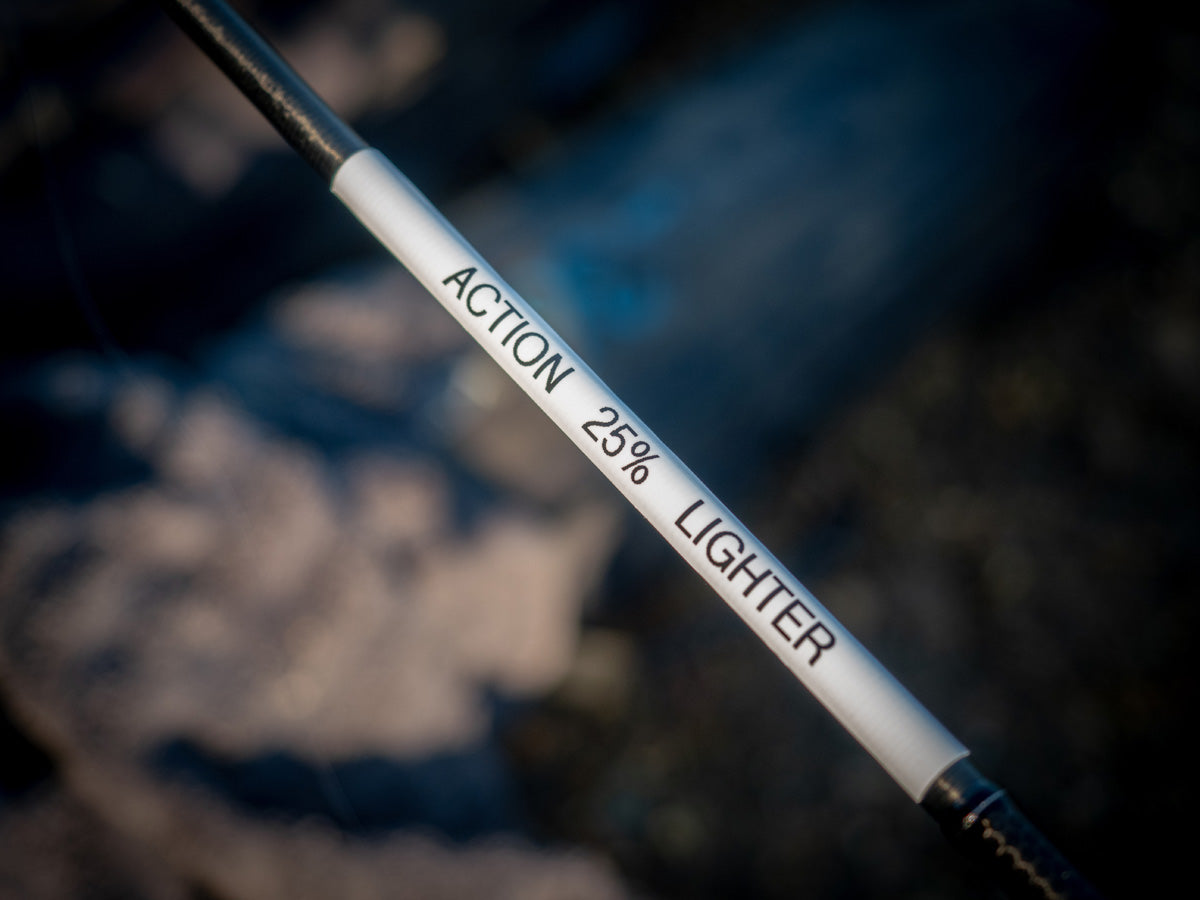
Rod choice is so important when it comes to fishing for skimmers and the new MAP Parabolix Pro Ultralight rods in 10 and 11ft are made for the job, with a super-soft through action and purpose-built hybrid tips which feature carbon and a spliced glass at the very tip, bite detection is magnified and more fish are hooked.


This leads me onto a common question – braid or mono? I like to keep to a simple rule to decide this, for under 20 metres I prefer a 6lb MAP Optimum mainline with a 0.21mm Optimum Power leader and for over 20 metres, I choose a 0.12mm braid and 0.21mm leader instead.
My reasoning for this is that with braid at very short range I can be on the fish too quickly, leading to hook pulls on the strike or the retrieve. Due to the short range, I don’t really need to increase the bite detection either as the amount of stretch in the line isn’t a negative in that scenario, and the benefits of braid only truly kick in at greater distances.

Hook lengths are also kept light with 0.11 Optimum Power being my first choice for skimmer fishing, the length of this is also important to get right and a 50cm hook length is always a good starting point.
The main aim of any match though is to shorten this up to speed up the bite time and it’s the little signs you need to look for that helps you make these changes. For example, if I’m getting chewed baits or I’m hooking the fish deeply the hook length is too long so I just keep taking a bit off until I get cleaner more positive indications.

Another sign to look out for is as soon as the feeder settles, you’re getting liners or bites this tells you that the fish are coming straight to the feeder and you could be waiting longer than necessary for a bite on a longer hook length. In today’s session at Barston, I’ve ended up using just a six-inch hook length which has seen me catch very well later in the day.

Keep Changing….
If there is one thing that anglers regularly get wrong it’s not reading why the fish are reacting in different ways and this can be down to the feeder choice you’re using.
My starting feeder will almost always be a small cage feeder, these have a lot of benefits, the main one being that the feeder will leave a small trail of groundbait through the water column that, in the early stages of a match is a massive help in drawing more fish into your peg.

With this property being excellent for getting fish into the swim, it can make them hard to catch too and if you’re getting plenty of signs but not many bites it can be time to swap over to a window feeder.
Swapping to a window feeder means that the bait is encapsulated inside the feeder – you can also feed more particles than groundbait if needed and is a great way of settling the swim down and concentrating the fish on the deck as opposed to being through the water column as the presentation is much more inert.

You may get less signs with a window feeder, but the next indication is likely to be a proper bite.
When the fish really turn up, especially on that short line the fish at Barston love to eat maggots!

This is where swapping over the cage or window feeder to a small maggot feeder can be absolutely deadly, and when the fishing is at its best this approach tends to pick out those bigger samples too, as there is less groundbait in the swim and the fish are focussed on eating larger particles, the bites are super-positive!
For me feeder choice is something that needs a lot of thought, it’s not uncommon that I’ll go from a cage to a window back and forth many times during a match to keep that activity going with catching the fish quickest at the heart of my decisions.

The Session
After a cold night and a frost which is typical of the spring where you can have a spell of warmer weather and then out of nowhere, you’re back in January, so I felt that the fishing could be quite tough!
Kicking off by feeding three bait-ups of pure Sonubaits F1 Dark and Sweet Skimmer on the long line and six with a few maggots included on the short line which I’d leave to settle.

Loading my size 16 GPMB hook with three fluro pinkies which is a great hook bait in coloured water, I started on a window feeder with a few pinkies included with the groundbait purely because I’d just fed an amount of groundbait, and wanted to gauge the response before I started to put a cloud of bait through the water with a cage feeder.
Straight away I was getting bites from small hand sized skimmers, but as it has been the case at Barston over the last few months after five fish, the swim dried up.

Taking five metres off the clip and going beyond the bait produced a few more and it was a case of rotating the lines to keep a few fish coming in the first two hours. When I felt there wasn’t as many fish I switched over to a cage feeder, and when the fishing was better a window feeder drew those fish down to the deck to feed.
I played around with feeding worms on this line, but you do need to be careful with worms in coloured water, sometimes they’ll be a complete game changer but on other day’s they can have a negative effect.

So just be careful before wading in and gauge the response feeding smaller amounts of worm first. On the hook redworms have been good, or the head of a dendra but after recent flooding adding a red maggot or fluro pinkie is helping the fish find the hook bait quicker.
Later in the session it was time to drop onto my short line at 14 metres, this had been fed heavier and left to settle and I was hoping that a few bigger fish had moved in to feed. Starting on a small cage loaded with chopped worm I had to wait a short while for bites, but they were a better stamp, the swim continued to build and a change to the maggot feeder was soon prompted by the size of the fish.

I believe the maggot feeder works so well because a lot of the time skimmers don’t live on the bottom, and seeing the maggots falling and the larger food items on the bottom, they’re much more likely to drop down.
Shortening the hook length has been important too, especially on the short line as it’s sped everything up massively, and after all in a match you’re always looking to come short to catch bigger fish or catch quicker in general, so getting that hook length down to six inches as soon as possible is so important.

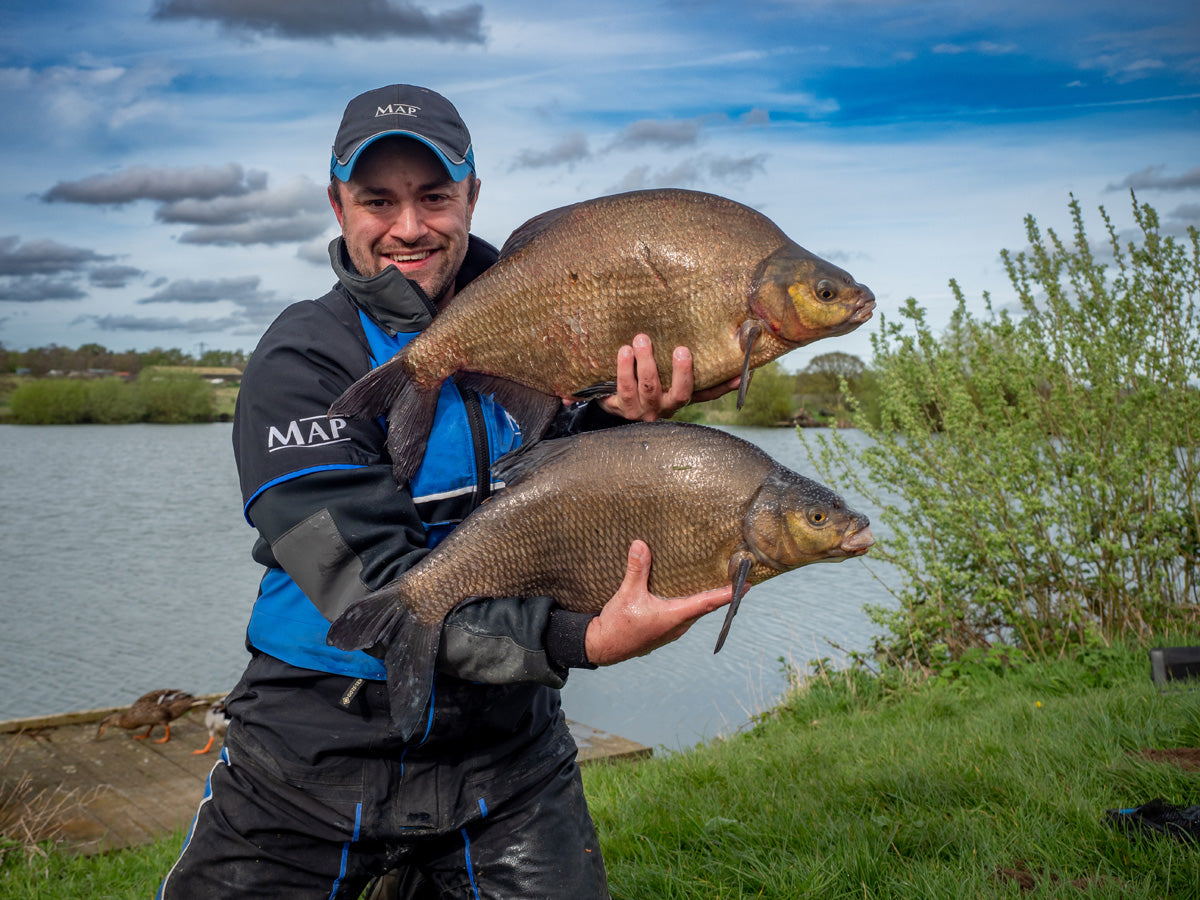
I had a great finish to the day, catching a decent skimmer every cast and after a difficult start to the day I’d managed to catch around 35lb of skimmers plus a few f1s and a bonus carp too.
It was another day where, if I’d stuck to my guns down one line waiting for the fish to arrive, I’d have been sat waiting for bites and not catching anywhere near what I have caught.
By ringing the changes, following the fish out as they back away, constantly swapping feeders over according to what the fish are telling you and altering the length of the hook length you will undoubtedly put more fish in your net!