
Embed: One Method, Countless Options!
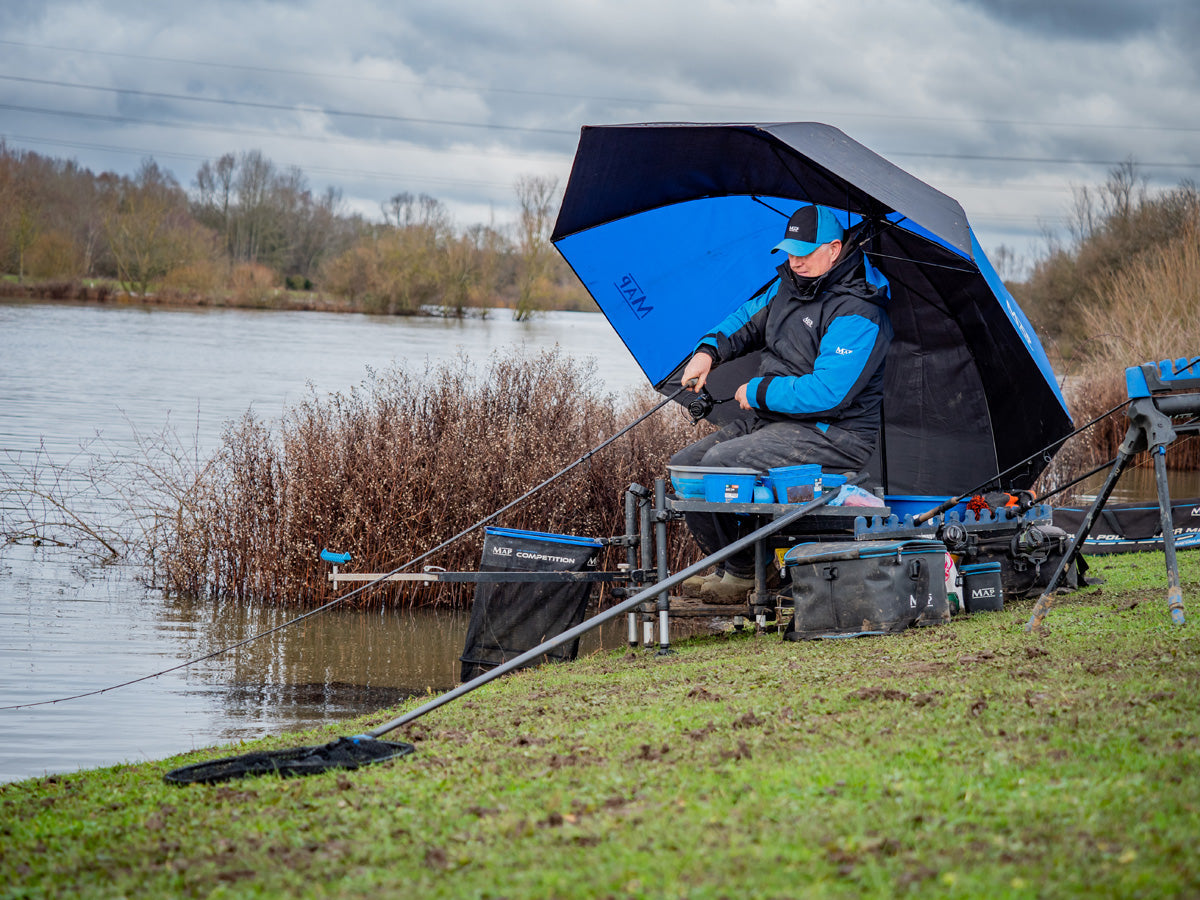
MAP's Tony Curd heads to Alders Farm Fishery to prove how versatile the Embed and Method feeder can be!
There is no denying that the Method and Embed feeder is a deadly year-round tactic on commercial and natural venues alike, but are you guilty of sticking to the tried and trusted?

At times we’ve all fallen foul to sticking to the same approach but despite the method’s simple appearance, you could be missing out on even better results by exploring the countless options available to you which can tip the odds in your favour, especially in the changeable conditions we face during the spring.
One day, the fish can be dragging the rod in every cast but on others following a chilly night, things can be very different so being adaptable is so important.

To show how you can get the most of this devastating feeder tactic, I’ve bought the cameras to the stunning Alders Farm Fishery where we’re going to tackle Ash Lake on a chilly late March Day, which holds a fantastic stock of carp and provides the perfect venue to put your tactics through their paces.
Feeder Type
The type of feeder you use is an important consideration not only in style but also size and weight. My preference of feeder choice for 99% of my commercial feeder fishing is the MAP Embed feeder.

This style of feeder is based around keeping the feed bait and hook bait held within the ‘dinner plate’ which is perfect for spring time fishing as the fish feed directly out of the feeder meaning that the hook bait will always end up in the fishes mouth.

The Embed is the only feeder available on the market which guarantees that your hook bait is perfectly presented throughout the duration of the cast without fail.
This is achieved by simply slotting your hook length into the integrated rubber line grip on the feeder which keeps the hook bait in place, exactly where it needs to be to make this tactic and feeder style at its most effective.

You can also adjust the hook angle by simply twisting the line within the clip, offering presentation that has never been possible before.
Once the fish is hooked the line simply pulls out of the soft line grip and the feeder is free running, making it fish safe and complies with all fishery rules.

The feeders are available in a wide range of sizes, and weights with all being interchangeable on the stem system by removing and replacing the feeder via a slot in the back of the feeder making this system hugely versatile.

The Set Up
One of the key elements to any kind of method or pellet feeder is the use of a short hook length, as these feeders are designed to provide a small pile of feed, having a long hook length is only a negative to your results.
I choose to use a 4” hook length virtually all of my fishing but there are times when I wished I could use a shorter hook length too, this is where the line grip on the Embed feeders can be invaluable, not only can I place my hook bait with precision I can also convert more ‘pick ups’ into proper bites!

It's important to keep your options open when fishing the Embed feeder though, like it is with any style and I like to bring a selection of different hook lengths for different baits.
I always bring a selection of spade ends for hooking maggots directly, some hook lengths with hair rigged pellet bands which are excellent for presenting hard pellets, some with hair rigged quick stops for meat and corn and finally some with bait spikes to present wafters.

A lot of anglers choose to band wafters, but I believe bait spikes offer the best presentation for this type of hook bait as it allows full movement of the bait.
I don’t like to tie my hooks to light line either, always choosing either 0.17 or 0.19mm MAP Optimum Power, and if I’m fishing with 5 to 7mm wafters I find that these balance best with size 14 or size 12 hooks.

It's important to add an element of versatility to your rig too, so a nice reliable hook length connector bead makes changing the hook length quick and easy allowing you to swap between the various hook length types I’ve mentioned.
The hook length connector I like to use comes supplied with the Embed feeder too which is super handy!

The rig itself is a standard inline feeder rig, with the feeder running on my 8lb MAP Optimum main line down to the bead. The rod is a super soft 10ft Parabolix Pro Feeder rod teamed up with a compact 3500x Parabolix reel.

Bait Choice
Having the right bait to put in the feeder is all important – in most situations, softened micro pellets are the best option.
At Alders fishery pellets have to be used, but there is a simple way of getting an edge and making your bait stand out from the crowd. Simply, to soak them I like to use some Dynamite Baits Betaine Green Pellet Soak liquid to soak the pellets in, this not only gives them a different colour but it also adds flavour too which is a great edge to have on fishery pellet only venues!

Groundbait can be effective in the spring too, especially if you’re going to fish a line in the margin at some point so I always bring a bag of Green Swim Stim to give myself that option of changing to groundbait, or even mixing the two together in a 50:50 ratio.
Hook baits are vitally important, with me I bring a big range of different wafters, pellets, maggots and corn to keep ringing the changes but when it comes to wafters, I find myself using these more than anything else.

This spring I’ve been having lots of success with the Mini Wowsers and Washters which are a tiny 3mm in size – perfect for catching lots of different species and sizes of fish on commercial venues.
Short Range
With an island in front of me today, which will occupy a lot of my focus, it’s important not to ignore other areas of your peg to give you those options of moving around your swim to keep bites coming throughout.

So, I’m going to prime a few lines – one against the island trees, one at around 16 metres where I’m going to loose feed some 6mm pellets and drop the feeder over it periodically to rest the island.
I’m also going to drop a little bit of groundbait in front of the next peg platform where hopefully a few fish will turn up later in the day – the feeder can be very effective down the edge on these venues, especially when foul hooking them on the pole is problematic!

Theory Into Practice
After clipping up against the overhanging island margin, I added a hook length to my rig and baited up with a yellow 3mm Washter on the bait spike. Loading the feeder is easy to get wrong so I like to lightly clip the hook length into the line grip first, then fill the feeder with a level load of pellets and press it down firmly.
You can then position the hook bait where you want it to be and then add a few more pellets before casting.

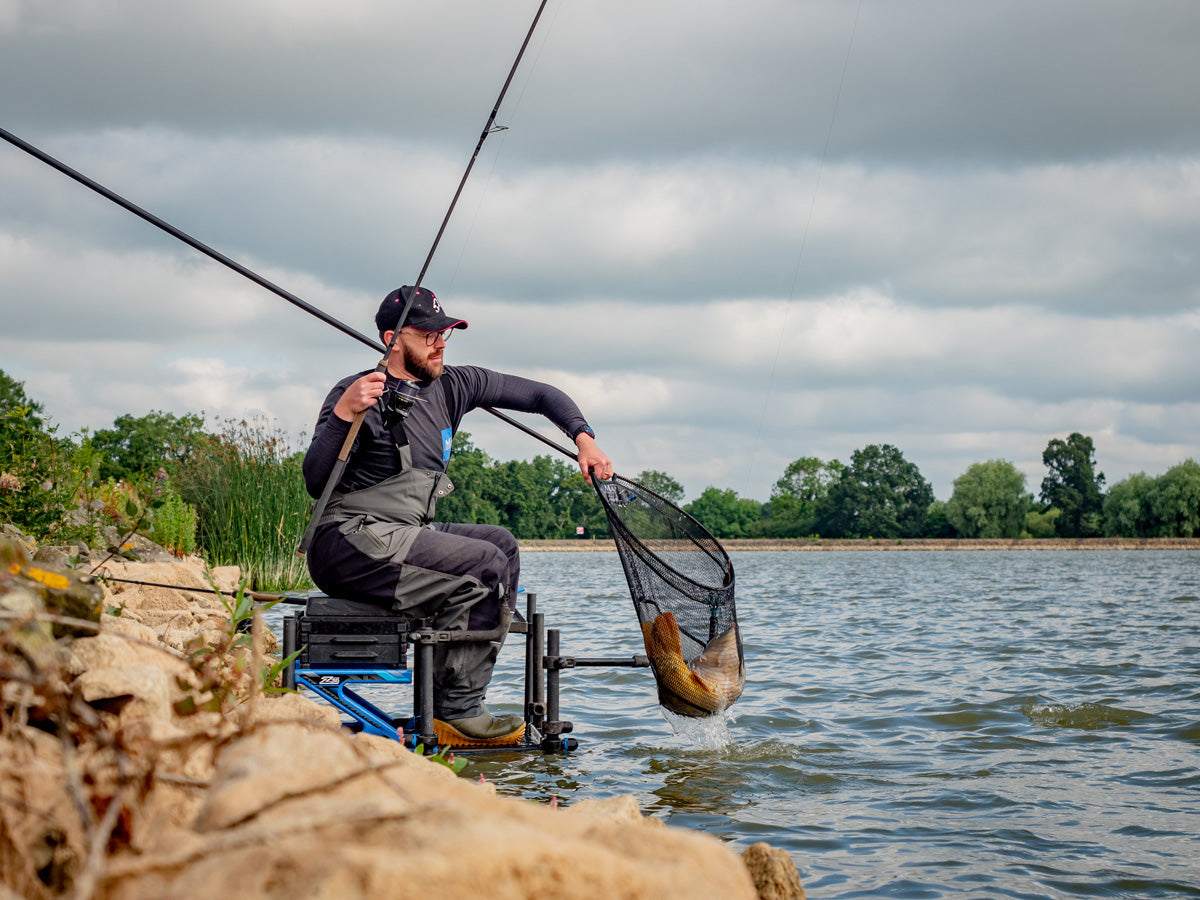
Casting out to the clip I set the rod down and judging by the number of signs I was getting on the tip it wasn’t going to be long before I was in action! A minute or so passed before the tip pulled round and the first Alders carp of the day was on its way to the net, not huge but great sport!
Over the next hour, I had plenty of bites, but it was typical spring time fishing where they’d soon move away from the pressure – this is where my loose feed line at 16m came in, I could simply change to a banded pellet, drop over this line and catch a couple more before going back across to the island where a few fish would have regrouped.

Hook bait colour was important on the day – with a bit of colour in the water after recent rain, a change to a 3mm white Wowser proved to get me a much quicker bite with lots of fish pulling the tip round while I was sinking the line! So, it just goes to show, that experimenting with hook baits can be so important.

With 25 carp caught in just a couple of hours between the two lines I was keen to finish the day down the margin to the next platform where I’d been feeding some groundbait throughout the day, loading the feeder with a mix of pellets and groundbait with three dead maggots on the hook.
Signs immediately gave confidence that a bite was incoming, and it wasn’t long before the tip pulled round – typically, the fish I caught from the margin were of a slightly bigger stamp too which just goes to show the importance of fishing the right areas of your peg at the right time of the day.

With over 100lb of carp caught in 4 hours fishing, it had been a brilliant day on the feeder and it just goes to prove that there is much more to fishing with the Embed feeder than just chucking to an island – keep your options open, keep changing those hook baits and the countless options this method provides will put plenty of fish in your net.